

By Damien Black
With Western democracies struggling to balance the books, many in DeFi are calling for new ways to manage the economy. A former lawyer believes that fiat currency itself is a bad investment – and says tokenization gives retail investors access to the high-yield products TradFi typically reserves for the rich.
Scott Thiel doesn’t tend to mince his words. A former hotshot lawyer from Melbourne, Australia, he worked in Hong Kong for years and is now based in Dubai, from where he launched his investment platform Tokinvest. His journey into tokenization began more than a decade ago, when Thiel was made partner in law firm DLA Piper and began to make serious money. Financial advisers he’d never heard from before were suddenly offering him high-yield investments to expand his wealth even further. “I was like, ‘Well this is very interesting. Where have you been all my life, guys?’ ‘Oh, you weren't rich enough for us to sell products to until now,’” he recalls.
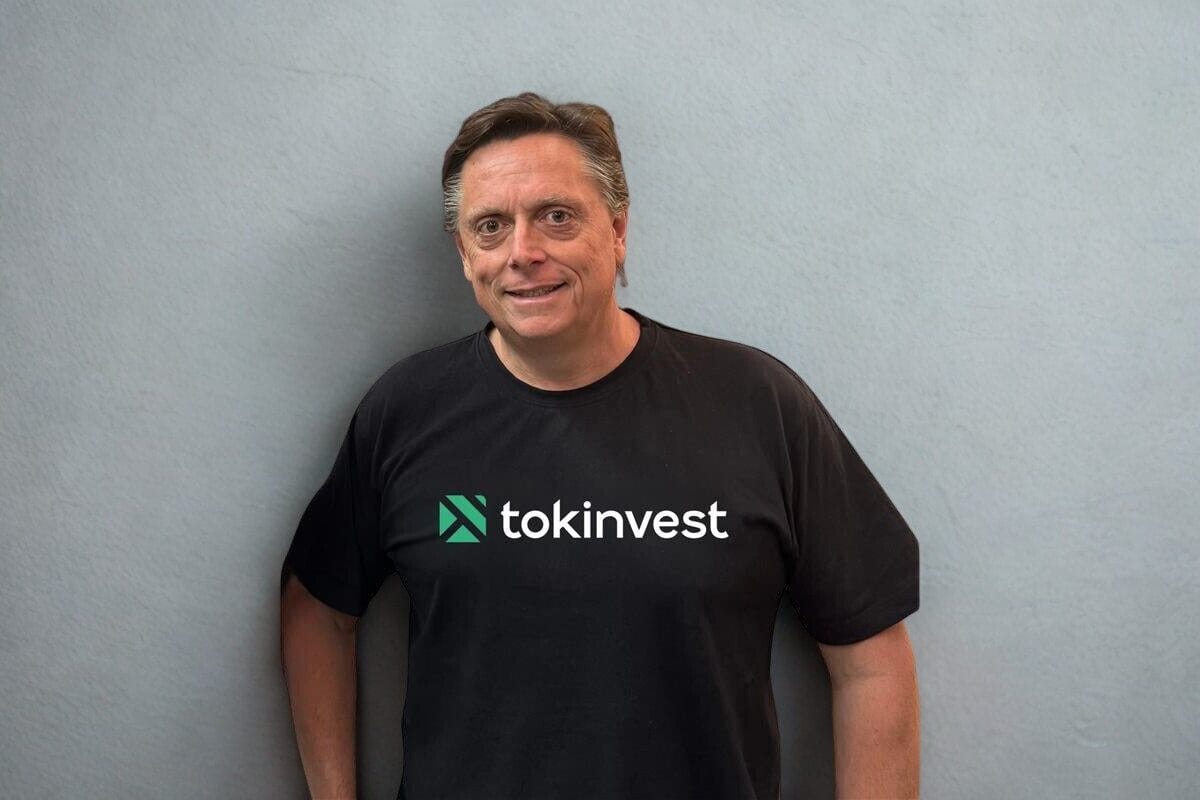
And that set him thinking: why shouldn’t ordinary retail investors be able to buy into financial products with high yields? I put it to Thiel that some estimate the top 1% in the UK own as much between them as the bottom 27 million people in the country combined – surely he doesn’t think everyone can become rich through tokenized investments?
“I’m not saying everyone can be in the 1%,” he clarifies. “What I’m saying is you can invest like the 1%. How did that top 1% get to be 1%?” They would probably tell you because they invested wisely, I suggest. “And you know why the rest didn’t?” Because they couldn’t, I suggest again, and Thiel agrees. “Regulators have no problem in the UK allowing people to buy bullshit, and going to William Hill and betting on the races and losing all their money,” he says. “Retail can do that [but] oh no, you guys can’t be trusted with the regulated well-structured products that rich people have. It just doesn’t sit well with me, any of that.”
Fiat currency: the poor man’s investment?
Before training as a lawyer, Thiel had graduated in computer science. He now began to wonder – could the confluence between technology and the law provide an answer to what he saw as the “inherent unfairness” in the financial and legal system?
“The idea of what I did as a lawyer, putting rights in contracts, that we will be able to put rights in tokens, sort of took hold,” he explains. “And even though I was an experienced partner in a global law firm, I [had previously] never understood the reality that regulated structured products are only for rich people. By law. It’s not because you can’t afford them, although some of them have high entry costs. But more fundamentally [under] most financial services laws, particularly in the UK, regulated products are not for retail investors. They’re only for high-net worth individuals and institutions.”
Thiel’s argument is that because most of us are locked out of a game reserved for institutional investors, we’re pushed into keeping our wealth – such as it is – in regular high-street banks that don’t provide good returns. He says this system penalises ordinary workers who are forced to accept being remunerated in a depreciating asset, otherwise known as fiat currency.
“If I said to you, I’ve got this amazing product, it’s going to be on token,” he hypothesizes. “You can buy some – it’ll go down in value by about 4% a year. Do you want some of that? I call it the pound. Because that’s what you’ve invested in. That’s what you’re saving in. And that’s what you’re holding.”
Thiel doesn’t stop there. “The word inflation is a lie,” he says. “It’s got nothing to do with milk being worth more today than it was yesterday. It’s got everything to do with the fact that having busted your gut working in those factories and for those corporates and earning those dollars or pounds, they are now being devalued. It is deflation of your currency – not inflation of everything you’re trying to buy with it.”
He’s got a point. A pint of fresh milk’s intrinsic use value remains the same and does not go up or down. But the currencies we use to purchase it do. “The rich never leave their money in cash because why would you? You go and put it in regulated investment products that are earning. For me personally, [that] just doesn’t seem right.”
From whisky to race horses: let’s tokenize!
But how does Tokinvest – the brainchild born of Thiel’s personal crusade to level the playing field for investors – propose to redress this imbalance? Though its early days for the platform, it already looks set to cover a multitude of (tokenized) sins – whisky, silver, race horses, a renovated 150-year-old tenement building in Birmingham.
“Tokenized racehorses was the first asset we did,” says Thiel. “The minimum buy for those was around about 700 dirhams, so that’s about £150. There’s no legal minimum for us.” Launched in tandem with Dubai Racing Club, the scheme had to be Sharia compliant in a country that adores racehorses but where gambling is illegal. “The first assets we gave to New Zealand horses, but we’re launching Dubai-based assets leading into the racing season after summer,” he says.
The list goes on. “We’ve got Franklin Templeton’s money market funds. That’s a very traditional tokenized financial product. I’ve just come off a call with a guy up in Scotland who runs high-end whisky investments, whole barrel. We’re going to tokenize whisky!” Tokinvest will be offering tokenized art investments too. “We’re close on regulatory approval for contemporary art, working with Maddox Gallery, an auction house in London – they’ve opened up a gallery here in Dubai, so we’ll be tokenizing, I think the first one’s a Warhol or a Banksy.”
Precious metals will go live from September. “We’re about to release this tokenized silver bar product, which is the world’s largest,” says Thiel. “It’s two tons of silver! Guinness Book of Records, big fanfare. But it’s commemorative: 1,971 kilograms [because] 1971 is the year of the birth of the UAE. So it’s a real national icon, if you like.” Every token on the platform will have a base unit value of 100 dirhams (£20) – but given that AML/KYC checks cost about $20 per customer, it isn’t feasible to have no bar of entry at all. “We can’t have tens of thousands of investors buying a dollar’s worth of something that costs us $20 to put on the platform,” Thiel clarifies.
Tokinvest’s “institutional grade” private-credit-backed digital bond, launched in tandem with Swiss firm LynxCap earlier this year, needs a minimum investment of EUR10,000 – although Thiel insists that’s still a fraction of the typical TradFi barrier to entry. “That product in its normal form in Luxembourg is EUR100,000 minimum and legally accredited investors only,” he says. “We’ve made a version of that available to all investors [who can meet the] ten thousand minimum.”
The LynxCap bond proposes to deliver on the promise of making high-yield products available to those with less capital to invest, offering annual returns of 10%, with a put option to redeem before the full maturity date of May 15, 2030. It’s only available to investors in the Middle East though, which brings us to Thiel’s new place of doing business. Why Dubai?
Blockchain alone isn’t enough
Thiel says the exclusive legal framework that applies in most jurisdictions lies at the heart of the problem, and it’s the reason why he incorporated in the Gulf state. Not even blockchain’s fractionalisation can lower the bar to admit ordinary retail investors – unless the law changes.
“Just because BlackRock put a product on a blockchain doesn’t mean the rules allow retail to suddenly come and buy it,” he says. “Ignoring the fact you can’t [because] you’re not a qualified institutional investor, you also don’t have $5 million kicking around to buy some treasury. So the whole system is stacked against that retail participant. Blockchain is great because it enables rights to be fractionalized and broken down into smaller pieces. But if the law still says only rich people can buy one of these, it doesn’t solve the problem.”
Thiel had first-hand experience of this legal barrier after he began developing Tokinvest in 2017 while still working as a lawyer at DLA. “I ran into this regulatory problem head-on. So I can now put a financial product on a blockchain, which is almost infinitely divisible – most crypto assets run at 18 decimal places, so you can have very small amounts. But the Hong Kong Securities and Futures Commission is saying: ‘No, that’s an investment product now, only for rich people.’ And the FCA is exactly the same in the UK, and most regulators. So I was like: ‘How are we going to solve it?’”
The Virtual Asset Regulatory Authority (VARA) in Dubai approached Thiel in 2022 with an offer he couldn’t refuse. “They heard about this Australian lawyer in Hong Kong who had already built a tokenization platform inside a law firm and was trying to democratize access to finance using blockchain and said, ‘Could you come to Dubai and write the law for us, please?’ So I did.”
In Thiel’s swan song for the legal profession, he went to Dubai and drew up the VARA regulations that same year. “And midway through that process, I transitioned out of the law firm. We’ve set up Tokinvest and we’re now a regulated issuer and broker-dealer.”
Democracies at a disadvantage?
He’s pretty upbeat about Dubai’s regulatory climate. “The level of strategic thinking that is unencumbered by liberal democracy inefficiency is quite remarkable to see. They have these very clear ambitions that they’re able to work on, on a generational basis.” He adds that Dubai’s government benefits from not being hampered by “the nonsense, which is politics and the need to win the next election”.
“When I pitched for the job to write VARA, I was nervous,” he admits. “What is the risk for me as a senior lawyer at a global law firm in being involved in a project in a jurisdiction like Dubai?” Back then the Gulf state was still on the Financial Action Task Force (FATF) grey list – it was removed in 2024 – and as Thiel puts it there was “lots of negative press around it”. But he was impressed by Dubai’s determination to become a global finance hub.
“In certain respects, they’re not encumbered by having an enormous trade system,” explains Thiel. “There isn’t Lloyds of London, HSBC, that hundred years of banking grey hair and great big walls of the banking world. There just isn’t that heritage of financial services. Hugely advantageous because there’s less to disrupt.” Thiel says this lack of legacy red tape allowed him to table regulations for VARA from the ground up pretty quickly – a painful contrast he says with the glacial rate of progress made by jurisdictions such as the UK.
“This was the mandate I was given: here’s your blank piece of paper, what are going to build?” he recalls. “And by the end of the first week, the managing director of the not-yet-formed organisation said to me, ‘I want you to move to Dubai. I'll arrange your golden visa. Give me the passports of your team. You’re the innovative thinkers that we want to help build this.’ Could you imagine the FCA doing that? [Dubai] has less of the big incumbent players, but it also has incredibly efficient government. When the Sheik says it’s going to happen and look like this, everyone goes, ‘Right, that’s the way we’re going.’”
Does Thiel believe then that liberal democracies have passed their sell-by-date? “Way past,” he answers without hesitation. “It’s so sad to watch. Liberal democracy has proven itself to be inefficient in the last 25, 30 years. I watch what happens in Australia. I watch what happens in Britain. I’m quite a big fan of the benevolent dictator model. Singapore is a pretty good example of it, I think the UAE’s a pretty good example of it, there are always imperfections but from an efficiency POV the amount of thrashing around that has to happen in democracies to get anything done is very inefficient. I don’t see much politics focused on making tomorrow better than today. It seems to be mostly focused on why that person is going to make it worse.”
His views might be unpalatable to some, but it’s difficult to deny Thiel has an unjust financial system bang to rights. The economy isn’t working for many ordinary people, and hasn’t been for years – and at the time of writing at least, democratic governments across Europe appear powerless to stop the rot. Can the likes of Tokinvest and the ‘quiet revolution’ it represents provide a route out of the relative poverty this situation has created? That remains to be seen.


