

By Anna Fedorova
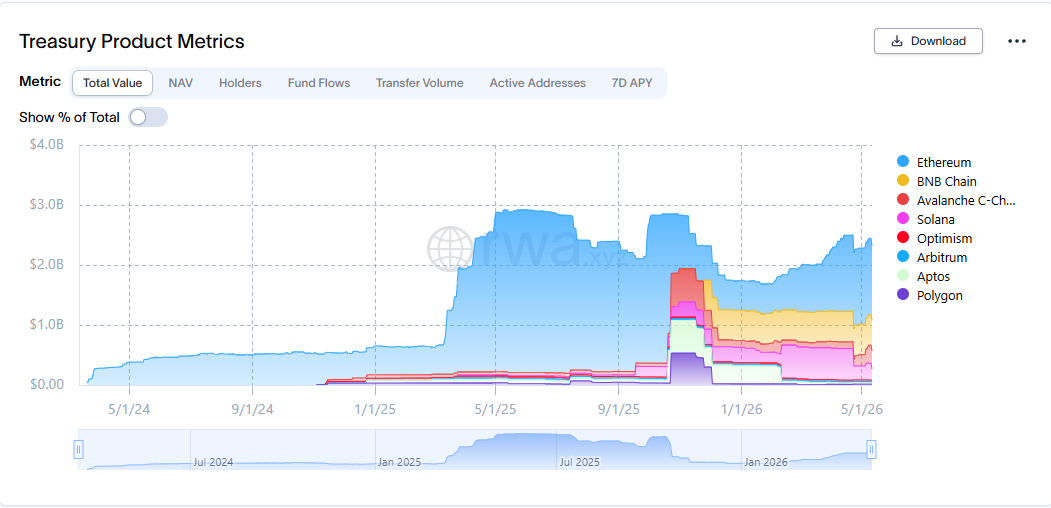
Recently, BlackRock made yet another move in its bid to dominate the decentralised finance (DeFi) space. Through a cutting-edge partnership with Standard Chartered and the major crypto exchange OKX, BlackRock has transformed its $2.3bn BlackRock USD Institutional Digital Liquidity (BUIDL) fund – a vehicle that allows investors to hold tokenised treasuries – into a productive asset.
For the first time in the history of decentralized finance (DeFi), professional investors are able to not only use the fund as collateral, but earn a yield on it at the same time. This solves a problem the DeFi space has grappled with for years, a roadblock for institutional investors. Before, stablecoins, other digital assets, and increasingly tokenised assets could be posted as collateral on crypto exchanges – but they would just sit idle until the position was closed. For institutions seeking ever-innovative ways to maximise returns on their capital, this was a missed opportunity. Who better than the world's biggest asset manager to change this? The current annual percentage yield (APY) on the BUIDL fund sits at 3.43%. That’s potentially an extra $34,400 a year for every $1 million worth of BUIDL shares held as collateral on OKX. There’s one catch, though: for now, this is only available to investors in the Middle East. This, in itself, is not a coincidence – more on that later.
BUIDL, in brief
So what exactly is the BlackRock USD Institutional Digital Liquidity fund? Launched in March 2024, BUIDL is BlackRock’s first tokenized money market fund. Investing 100% of its total assets in cash, US Treasury bills, and repurchase agreements, it allows institutional investors to earn yield while holding a token on the blockchain that represents their ownership. BUIDL seeks to offer a stable value of $1 per token and pays daily accrued dividends directly to investors' wallets as new tokens each month. In the two years since its launch, BUIDL has become a key building block in the DeFi ecosystem. Several stablecoins, including Ethena’s USDtb and Frax Finance’s frxUSD – both established names in the DeFi space – use BUIDL as collateral. It was also integrated with Circle in April 2024, allowing instant redemption into the USDC stablecoin – one of the two leaders in the market. And in February, it was integrated into Uniswap – one of the biggest decentralized exchanges. Now, all of these holders will be able to earn yield on their collateral.
In an interview with Cointelegraph following the latest news, Rifad Mahasneh, MENA and CIS CEO at OKX, explained that the user experience was designed to be as seamless as possible. Investors simply buy BUIDL directly on OKX and start earning yield while the asset is in custody with Standard Chartered – and simultaneously able to use this asset for trading purposes on the OKX platform.
On the OKX Learn blog, the exchange explains that “on-exchange, BUIDL can be deposited and used as yield-bearing collateral across trading activities on OKX. As yield continues to accrue, margin becomes productive and balance sheets become more efficient”. Yield on the product accrues daily, but is paid out monthly into the holder’s wallet in the form of new, so the collateral compounds.
So far, so simple. But what OKX and BlackRock have not publicly addressed yet is what happens to pending yield in the event of mid-month liquidation. BUIDL pays dividends monthly, not continuously, so a position closed out before the month-end rebase may forfeit any accrued but undistributed interest on the seized collateral. Neither company has published documentation clarifying whether that yield is rebated to the holder or simply absorbed.
The regulatory bet
Launching this product in the UAE is important strategically. For years, the UAE has arguably been more open to digital asset innovation than almost any other nation on Earth. But, crucially, this openness has been within a clear regulatory framework: music to the ears of any major institution. UAE established a dedicated digital assets regulator – the Virtual Assets Regulatory Authority (VARA) – in 2022, well before any other major nation was anywhere close to such a decisive move. In an interview with Cointelegraph, OKX’s Middle East CEO says this regulatory clarity has given the region an edge that “isn’t going away anytime soon” – one that has attracted complementary partners and supported the buildout of banking infrastructure to support blockchain-led innovations. He says: “UAE has done a great job in becoming a hub – it not only regulates but continues to innovate on this regulation.”
The choice makes sense for a product at the cutting edge of finance, but I suspect BlackRock would have rolled this out in New York if it could have. Perhaps the Western financial centres aren’t quite ready for this level of experimentation. Or, perhaps, BlackRock wants to use the UAE as a testing ground.
A look under the hood
But while on paper, the whole thing looks like an exact replica of how collateral works in the traditional financial world, it’s a bit more complicated than that in practice. Firstly, unlike listed US funds, BUIDL is not registered with the Securities and Exchange Commission (SEC) and not a Rule 2a-7 registered money market fund. As such, it doesn’t have to disclose granular details about its underlying holdings, and all that’s publicly reported is which assets are in the mix.
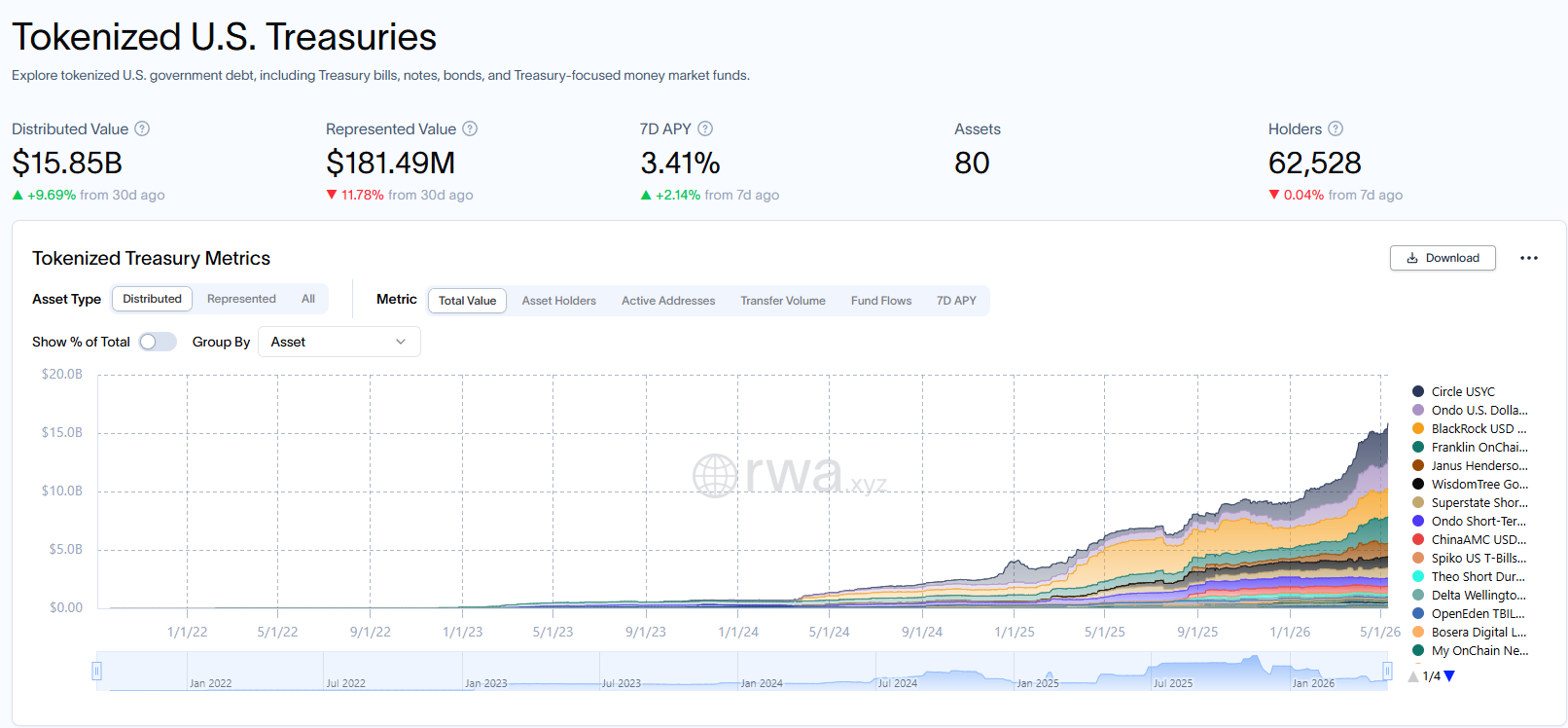
Secondly, and more importantly, like any other token on a blockchain, BUIDL trades 24/7, in contrast to the underlying assets it provides exposure to, whatever proportion they may be in. That creates a liquidity mismatch outside of normal market trading hours. Of course, this doesn’t mean investors will suddenly be locked out of their assets if they suddenly decide to redeem on the weekend – the sophisticated infrastructure behind the scenes means their redemption request would be processed instantly even if the underlying asset isn’t trading.
But it does introduce an additional layer of complexity. This could affect valuations if the market moves sharply and could theoretically lead to haircuts during times of market stress. OKX says BUIDL is treated as “fungible” with USD and USDC, so there’s no haircut applied to the valuation at the outset. OKX's general margin documentation, however, notes that every collateral asset is subject to a discount rate calibrated to its volatility and liquidity profile – so the precise number applied to BUIDL, and whether it differs in stressed market conditions, is opaque.
The ghost of 10/10
The financial system works until it doesn’t, and crypto infrastructure has a history of struggling when volumes spike too high. The best example of this is 10 October 2025 (referred to in the industry simply as 10/10), when at least $19 billion in leveraged crypto positions were wiped out in 24 hours, leaving market makers reeling for months. Aaron Rafferty, co-founder of WYDE – a non-profit that runs a crypto exchange that directs all fees toward charitable initiatives – warns that the rails BlackRock is building on have not yet been tested with BlackRock-scale flows. “Uniswap has done trillions in volume but has not held anywhere near a trillion in assets (neither has the whole of DeFi),” he notes, pointing out that even that would be merely a tenth of BlackRock’s AUM.
Referencing the 10/10 sell-off, he also notes that one of the problems was that Binance was treating Ethena's USDe as same-tier collateral with USDC. However, unlike USDC – which is one of the two most used stablecoins with a market cap of $77 billion – USDe’s market cap is less than $4 billion. On the fateful day, it flash crashed from $1 to somewhere around $0.65 on Binance due to liquidity issues, causing forced liquidations that exacerbated the market crash. “The failure point isn't the tokenized asset itself, but the venue treating it as interchangeable with cash,” says Rafferty.
OKX’s Mahasneh, however, says the BUIDL product was “designed to minimize risk rather than add layers of risk”. And that may well be true in practice. After all, run by the biggest asset manager in the world and custodied by one of the most established banks on the planet, BUIDL is a very different kettle of fish from a small decentralised stablecoin. But, as they say, to be forewarned is to be forearmed.
What to watch
So is this as revolutionary as headlines would have us believe? For institutional crypto holders, this is a big improvement. But thinking of the 3.43% APY as a free lunch would be a mistake. This is the reward investors receive for taking on the risk of holding a token that trades 24/7 but could, in theory, decouple from the underlying market it tracks. And as 10/10 showed, even a momentary flash crash could be catastrophic for the wider digital asset market.
As OKX investors in the UAE begin to use this new feature, the real sign that this is a big deal would be if BlackRock starts expanding this to other jurisdictions, and which ones approve it first. The hardest-to-crack markets – London and New York – will be the real vote of confidence.
In the US specifically, it’s worth watching whether BlackRock's new US-domiciled BSTBL and BRSRV – structured to qualify as eligible stablecoin reserve assets under the GENIUS Act – get the same productive-collateral treatment. If it does, usage could skyrocket, but it will only pass the stress test when it can match BlackRock’s multi-trillion-dollar volume without breaking.


